
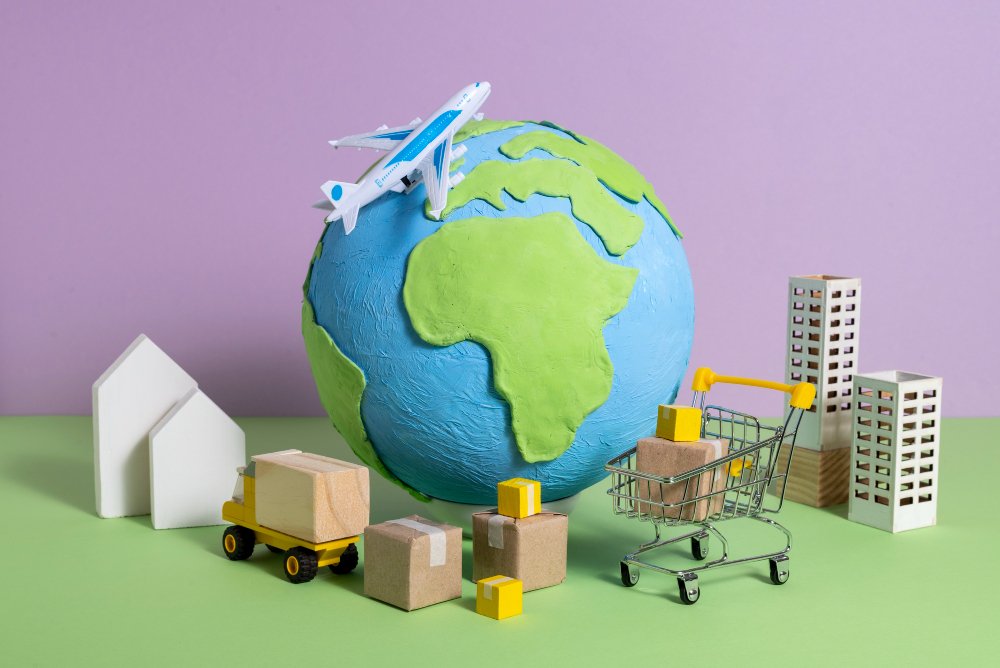
Global Trade Explained
Global trade, also called international trade, is the exchange of goods, services, and capital across national borders. It plays a critical role in economic growth, development, and global integration. Understanding global trade helps businesses, policymakers, and students navigate the complexities of international markets.
1. Definition and Importance of Global Trade
Global trade involves exporting and importing goods and services between countries. It enables nations to:
- Access resources they lack domestically
- Expand markets for their products
- Promote economic specialization and efficiency
- Increase income and employment opportunities
Countries engage in trade to benefit from differences in resource endowments, technology, and production capabilities.
2. Theories of International Trade
Several economic theories explain why countries trade:
- Absolute Advantage (Adam Smith): Countries should produce goods they can produce more efficiently than others.
- Comparative Advantage (David Ricardo): Countries should specialize in goods where they have the lowest opportunity cost, even if they do not have an absolute advantage.
- Heckscher-Ohlin Model: Trade occurs due to differences in factor endowments like labor, land, and capital.
- New Trade Theories: Economies of scale and network effects can lead to trade even between countries with similar resources.
3. Types of Trade
- Bilateral Trade: Exchange between two countries, often governed by agreements or treaties.
- Multilateral Trade: Involves multiple countries, often under international organizations like the World Trade Organization (WTO).
- Intra-Industry Trade: Exchange of similar products within the same industry, common in developed economies.
4. Trade Policies and Barriers
Governments implement policies to regulate trade:
- Free Trade: Minimal restrictions, tariffs, or quotas, promoting efficiency and consumer choice.
- Protectionism: Policies such as tariffs, import quotas, and subsidies to protect domestic industries.
- Trade Agreements: Regional or global agreements (e.g., NAFTA, EU, African Continental Free Trade Area) facilitate market access and reduce trade barriers.
5. Balance of Trade and Payments
- Balance of Trade (BoT): Difference between a country’s exports and imports. A surplus indicates more exports than imports, while a deficit shows the opposite.
- Balance of Payments (BoP): Records all economic transactions with the rest of the world, including trade, investment, and transfers.
6. Benefits of Global Trade
- Economic Growth: Expanding markets increases production and income.
- Efficiency and Specialization: Countries focus on goods they produce best, reducing costs.
- Consumer Choice: Access to a variety of goods and services at competitive prices.
- Technology Transfer: Trade encourages innovation and adoption of advanced technologies.
- Job Creation: Export industries generate employment opportunities.
7. Risks and Challenges
While trade offers benefits, it also presents challenges:
- Trade Deficits: Persistent deficits may increase debt and weaken domestic industries.
- Dependency: Over-reliance on imports or exports can make economies vulnerable to external shocks.
- Inequality: Gains from trade may not be evenly distributed within a country.
- Environmental Impact: Increased production and transportation can harm natural resources.
8. Globalization and Trade
Globalization has accelerated trade through technological advances, improved transportation, and communication. Companies can operate internationally, supply chains are interconnected, and markets are integrated. This has created opportunities for emerging economies to participate in global markets but also exposes them to global economic fluctuations.
9. Trade in the 21st Century
Modern trade increasingly focuses on services, digital goods, and intellectual property. E-commerce platforms and digital services enable cross-border trade in ways that traditional goods trade could not. International standards, trade facilitation, and investment in technology are crucial for competitiveness.
10. Policy Implications
Effective trade policy balances protection for vulnerable industries with opportunities for growth:
- Diversification of exports to reduce dependency
- Investment in infrastructure and technology
- Trade agreements that enhance market access while protecting labor and environment
- Monitoring global trends to respond to economic shocks
Conclusion: Global trade is a cornerstone of modern economies. By enabling countries to specialize, exchange goods and services, and access broader markets, trade promotes economic growth and prosperity. Understanding its mechanisms, benefits, and challenges is essential for policymakers, businesses, and students aiming to navigate the global economy effectively.
