
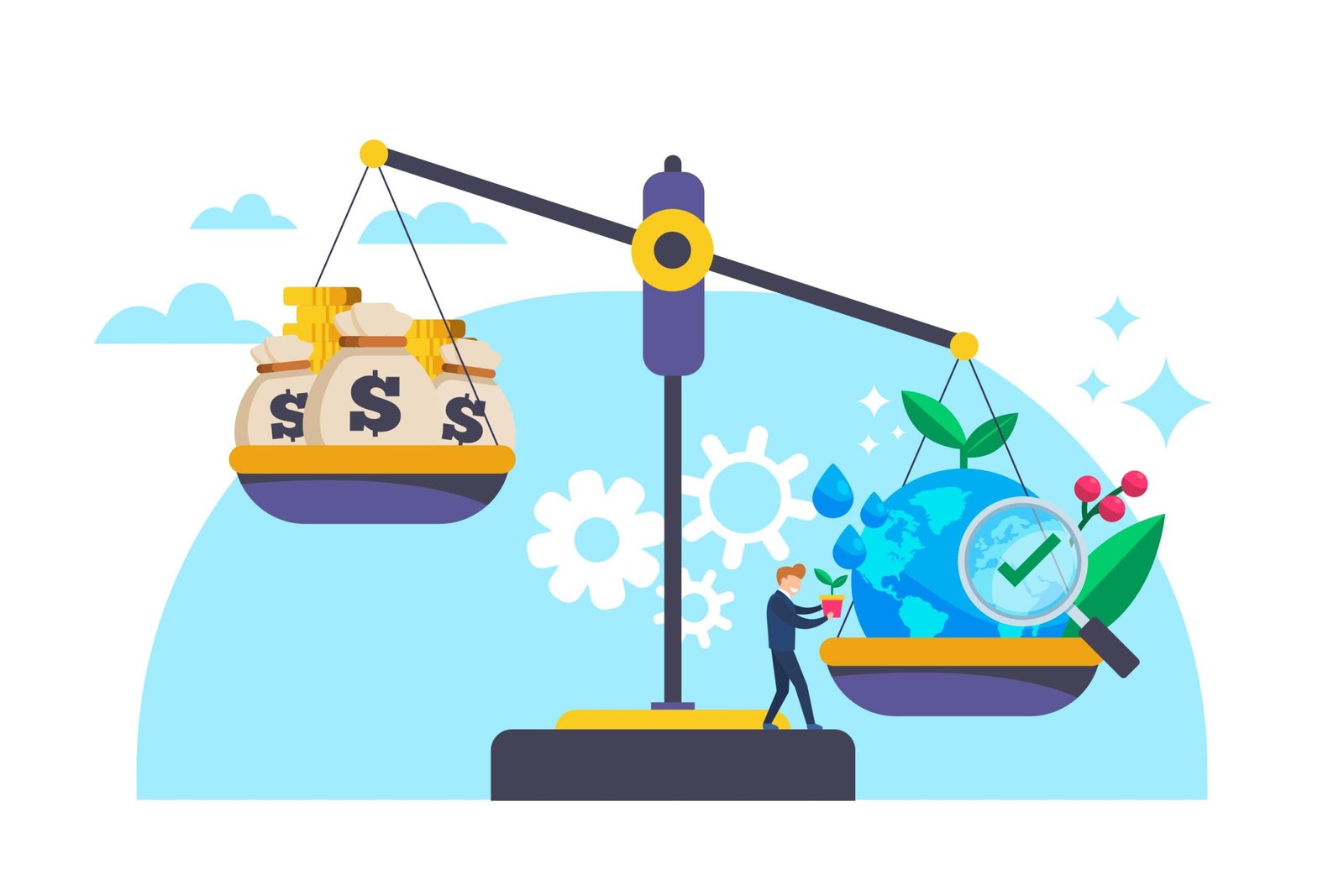
Introduction to Microeconomics
Microeconomics is the branch of economics that studies the behavior of individuals, households, and firms in making decisions regarding the allocation of limited resources. Unlike macroeconomics, which examines the economy as a whole, microeconomics focuses on small units and their interactions within markets.
1. Definition and Scope
Microeconomics analyzes how consumers and producers respond to changes in prices, income, and market conditions. Its main goal is to understand resource allocation, pricing mechanisms, and the efficiency of markets. Key areas include:
- Consumer behavior and demand
- Production and cost analysis
- Market structures and competition
- Factor markets (labor, capital)
2. Fundamental Concepts
- Scarcity and Choice: Resources are limited, forcing individuals and firms to make choices about what to produce, consume, or invest in.
- Opportunity Cost: The value of the next best alternative foregone when making a decision. Every choice has a trade-off.
- Marginal Analysis: Decision-making is based on comparing additional benefits and additional costs.
3. Consumer Behavior
Consumers aim to maximize satisfaction or utility within their budget constraints. Concepts include:
- Law of Demand: Quantity demanded decreases as prices rise, ceteris paribus.
- Elasticity of Demand: Measures responsiveness of demand to price changes, income, or prices of related goods.
- Indifference Curves and Budget Lines: Represent combinations of goods providing equal satisfaction under budget constraints.
4. Production and Costs
Firms aim to maximize profit by producing efficiently:
- Production Function: Relationship between inputs (labor, capital) and output.
- Short-Run Costs: Include fixed and variable costs; key concepts are total, average, and marginal costs.
- Long-Run Costs: Firms adjust all inputs; economies of scale reduce average cost as output increases.
5. Market Structures
Microeconomics studies how different market conditions affect prices, output, and efficiency:
- Perfect Competition: Many sellers, identical products, free entry and exit; firms are price takers.
- Monopoly: Single seller dominates the market; prices are higher, output lower, and efficiency may decline.
- Monopolistic Competition: Many sellers with differentiated products; moderate pricing power.
- Oligopoly: Few dominant firms; strategic interactions influence pricing and production decisions.
6. Factor Markets
Microeconomics also examines how resources are allocated in labor, capital, and land markets:
- Labor Market: Wage determination, labor supply, and demand.
- Capital Market: Investment decisions, interest rates, and capital allocation.
- Land and Natural Resources: Rent determination and resource allocation efficiency.
7. Market Failures and Government Intervention
Markets may fail to allocate resources efficiently due to:
- Externalities: Costs or benefits affecting third parties (e.g., pollution, vaccination).
- Public Goods: Non-excludable and non-rival goods leading to free-rider problems.
- Information Asymmetry: Unequal access to information, causing suboptimal outcomes.
Government intervention, such as taxes, subsidies, regulations, or direct provision of goods, corrects market failures and improves social welfare.
8. Applications of Microeconomics
Microeconomics provides tools for decision-making in various areas:
- Business Strategy: Pricing, production, and marketing decisions.
- Public Policy: Taxation, subsidies, regulation, and welfare programs.
- Personal Finance: Understanding consumption, investment, and labor decisions.
9. Importance of Microeconomics
Studying microeconomics helps individuals and institutions:
- Make informed choices under scarcity
- Predict and respond to market changes
- Improve efficiency and resource allocation
- Design policies that promote economic welfare
Conclusion: Microeconomics is foundational to understanding how individuals and firms operate within markets. Its principles guide everyday economic decisions, business strategies, and public policies. By focusing on resource allocation, pricing, and market efficiency, microeconomics equips students and professionals with practical tools to navigate and influence economic activity.
